Why Do Carpets Get Dirty Faster After Cleaning?
Carpets often get dirty faster after cleaning because leftover detergent or moisture can make soil cling to the fibers. Use measured solution, extract slowly, and keep traffic off until the carpet dries.
On this page (10 sections)
- Why do carpets get dirty faster after cleaning?
- Can detergent residue make carpet look dirty again?
- Can wet carpet bring dirt back to the surface?
- What cleaning steps prevent quick resoiling?
- Which carpet cleaner features help with extraction?
- How should you set up and use a carpet cleaner?
- How can you help carpet dry sooner?
- What mistakes make carpets dirty again?
- What should you do if the carpet still looks dirty?
- How do you stop carpets getting dirty faster after cleaning?
Carpets often get dirty faster after cleaning because leftover detergent or moisture can make soil cling to the fibers. If you’re asking why do carpets get dirty faster after cleaning, start by checking how much solution you used, how slowly you extracted, and whether you kept traffic off while the carpet dried.
A spot that returns as the carpet dries may be old soil or stain residue rising from below the visible fibers. A sticky feel or quick resoiling in the same traffic lanes can point to detergent residue, though spills and daily foot traffic can cause similar signs.
Why do carpets get dirty faster after cleaning?
Leftover cleaning solution and damp fibers are common reasons a carpet seems to soil again quickly. Residue can catch fresh dirt, while moisture can carry hidden soil toward the surface as it evaporates.
Using extra detergent does not necessarily clean more. A concentrated mix or too many wet passes can leave residue behind when the machine cannot extract it all.
Water alone can also cause trouble if too much remains in the carpet. Damp fibers are more likely to pick up tracked-in dirt, and wet backing can prolong drying.
Can detergent residue make carpet look dirty again?
Yes, detergent residue can leave a film that attracts soil. This is more likely when you use more solution than the machine calls for or make too few slow extraction passes.
Measure the solution according to the cleaner and solution instructions. If the machine supports a rinse pass, use it only as directed, then make slow suction-only passes to remove as much moisture as possible.
Don't add extra soap to tackle a stubborn spot. Blot first, use a compatible spot treatment as instructed, and avoid soaking the carpet backing.
How can you tell if residue is why carpets get dirty faster after cleaning?
A tacky feel or rapid resoiling in the same traffic lanes can suggest residue. It is a clue rather than a sure diagnosis, since regular foot traffic and a recurring spill can create a similar pattern.
Try a small, inconspicuous area before changing your routine across the room. If the carpet still feels sticky once dry, check the machine and solution directions before cleaning again.
Can wet carpet bring dirt back to the surface?
Yes, stains can wick upward as moisture evaporates. Liquid and dissolved soil left below the visible fibers may rise during drying, making an old mark appear again.
Blot a fresh spill instead of rubbing it, which can push liquid deeper or spread it. For an older stain, choose a method suited to the carpet and the stain, and test the cleaner in a hidden area first.
A carpet extractor can help remove water and dissolved soil, but the result depends on the carpet, cleaning method, and extraction. Read whether steam cleaning carpet really works before choosing a method.
What cleaning steps prevent quick resoiling?
Vacuum first, measure solution, and make slow extraction passes. These steps help limit the loose soil, residue, and moisture left behind after a deep clean.
- Vacuum the carpet before wet cleaning to remove loose soil.
- Mix solution exactly as directed for your machine.
- Work in manageable sections and avoid saturating the carpet with repeated wet passes.
- Extract slowly, overlapping passes where needed.
- Ventilate the room and keep people and pets off until the carpet is dry.
If marks keep returning, review how often to steam clean carpet and adjust for the room's traffic and soil. Cleaning more often can add moisture without fixing the cause.
Which carpet cleaner features help with extraction?
Choose a machine whose cleaning routine you can follow and whose tools fit the areas you clean. Suction and a clear rinse or dry-pass routine can help remove moisture after washing, while brushes and attachments address different cleaning needs.
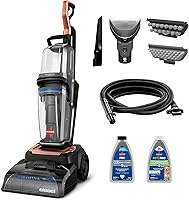
The Bissell TurboClean OXY 3952 suits smaller spaces and high-traffic carpet, with a 4-row brush and suction. It is a compact choice for everyday and pet messes on carpet and area rugs.
The Hoover PowerScrub Deluxe fits broader cleaning needs, including upholstery and stairs. Separate clean and dirty water tanks, five counter-rotating brushes, an 8 ft hose, and included tools support that wider use.
The Hoover SmartWash+ suits people who want a simple pass pattern: push forward to clean and pull back to dry. Auto Mix and motion sensing reduce the measuring and button steps, while the included pet and stair tools expand where you can use it.
Skip the TurboClean if you need a broad set of tools for stairs and upholstery. Skip the PowerScrub if its larger setup and extra attachments are more than your smaller rooms require, and skip the SmartWash+ if you prefer direct control over each cleaning step.
Compare machine styles in our carpet steam cleaner guide before deciding what fits your home.
How should you set up and use a carpet cleaner?
Prepare the room and follow the machine's solution directions before making a wet pass. Good setup helps you avoid unnecessary water, missed areas, and a long cleanup.
Move small furniture and vacuum the carpet to lift loose soil first. Fill the clean-water tank as directed, measure the correct solution amount, and plan a route toward the exit so you do not need to cross freshly cleaned sections.
Clean a small test area if you are unsure how the carpet or stain will respond. Work in sections and use steady passes.
Avoid repeatedly spraying a stubborn spot. After washing, use the machine's extraction or dry pass as instructed.
How can you help carpet dry sooner?
Keep people and pets off until the carpet is fully dry, and improve airflow when practical. Open windows when outdoor conditions allow or use a fan to move air across the room.
Drying time depends on the carpet, room conditions, and how much water remains. Don't judge readiness by the surface alone if the backing still feels damp.
Avoid replacing furniture too soon. If furniture must go back before everything is dry, follow the carpet and machine guidance to prevent marks or trapped moisture.
What mistakes make carpets dirty again?
Overusing detergent, over-wetting the carpet, and rushing extraction can all contribute to quick resoiling. Repeating a full-room wash before finding the cause can add moisture without solving a returning spot.
Don't rub a spill aggressively, mix cleaning products without checking compatibility, or use more solution than directed. Avoid walking on damp fibers and vacuuming before they dry.
For recurring marks, identify the spill source and choose a targeted treatment that suits the material. A carpet shampooer and carpet cleaner comparison can help you choose the right kind of machine for your cleaning routine.
What should you do if the carpet still looks dirty?
Wait until the carpet is fully dry, then vacuum and inspect it in good light. This helps you separate loose surface soil from a stain that needs another treatment.
If the carpet feels sticky, review the detergent amount and extraction steps before cleaning again. If it smells musty or remains damp, improve airflow and follow the carpet or machine care instructions.
Pause before repeating a full-room wash. Choose a targeted method for a returning spot, and see how carpet steam cleaning works if you are deciding whether a machine-based wash is appropriate.
How do you stop carpets getting dirty faster after cleaning?
Pick the cleaner that matches your rooms, then control residue and drying with every wash. Choose the Bissell TurboClean for compact cleaning in smaller spaces, the PowerScrub Deluxe for carpet and upholstery with separate tanks and included tools, or the SmartWash+ if its forward-clean and backward-dry routine suits you.
Use measured solution, extract slowly, and keep traffic off until the fibers dry. If the carpet soils quickly again, inspect for residue, moisture, or a recurring spill before scheduling another full clean.
Frequently asked questions
Why do carpet stains come back after cleaning?
Stains can return when liquid or dissolved soil remains below the carpet surface and wicks up as the fibers dry. Detergent residue may also catch fresh soil.
Blot spills promptly, follow the cleaner's dilution directions, and make slow extraction passes.
Does carpet cleaner residue attract dirt?
Yes, leftover detergent can leave a film that holds soil tracked across the carpet. Measure the solution as directed for your machine, avoid heavy wetting, and rinse only when the machine instructions call for it.
How long should I wait before walking on a cleaned carpet?
Wait until the carpet is fully dry before normal foot traffic. Drying time varies with airflow, room conditions, carpet construction, and how much water remains.
Keep people and pets off while it dries, and use fans or ventilation when appropriate.
Can I vacuum a carpet after cleaning?
Vacuum after the carpet is completely dry, unless your cleaner's instructions say otherwise. Vacuuming damp fibers may spread soil.
Once dry, vacuum to pick up loosened particles near the surface.