Can You Use a Carpet Shampooer on a Wool Rug?
Yes, you can use a carpet shampooer on a wool rug, but only with a wool-safe formula, a low-moisture setting and fast drying. Wool shrinks and felts when it stays wet or gets scrubbed hard, so the machine matters less than how you use it.
On this page (9 sections)
- Can you use a carpet shampooer on a wool rug at all?
- Which setting and formula keep wool safe?
- Can you use a carpet shampooer on a wool rug with heavy stains?
- How do you prepare a wool rug before shampooing?
- How do you run the shampooer over a wool rug?
- How do you dry a wool rug quickly and flat?
- Which shampooer settings suit wool rugs best?
- When should you skip the shampooer and call a pro?
- What else should you know before you start?
Yes, you can use a carpet shampooer on a wool rug, but only with a wool-safe formula, a low-moisture setting and fast drying. Wool shrinks and felts when it stays wet or gets scrubbed hard, so the machine matters less than how you use it.
Use this guide to decide whether your rug and your cleaner are a safe pair.
The short version: a shampooer can refresh a wool rug's surface dirt and light stains, but it is not the tool for deep-set grime or heavily soiled wool. Go gentle, test first, and dry fast.
Can you use a carpet shampooer on a wool rug at all?
Yes, a carpet shampooer can be used on many wool rugs, provided the machine is set to a low-water mode and the formula is made for wool. The risk is not the machine's brush alone; it is excess water and harsh detergent.
Wool is a protein fiber with scales that open and lock together when agitated while wet. That is how felt is made.
A shampooer sends water into the pile and pulls most of it back out, but the residue left behind matters as much as the water.
Check the rug's care label first. Hand-knotted, antique and viscose-blend rugs often call for professional cleaning, and some wool rugs carry a "dry clean only" instruction.
If the label allows water, a shampooer is a practical way to lift everyday dirt. If it doesn't, stop here and book a professional.
Which setting and formula keep wool safe?
Use the lowest-water setting your shampooer offers and a pH-neutral formula labeled for wool. Skip high-alkaline carpet shampoos and any product with bleach or strong stain boosters.
Wool is naturally slightly acidic, so alkaline cleaners can strip its lanolin and leave the pile dry and brittle. A wool-specific shampoo keeps the fiber's pH closer to normal and rinses out more easily.
On the machine, choose express or light-clean mode if it has one. These modes use less solution and often dry faster.
Avoid the deep-clean setting that floods the pile.
Dilute the formula exactly as the bottle says. More shampoo does not mean cleaner wool; it means more residue that attracts dirt later.
Can you use a carpet shampooer on a wool rug with heavy stains?
For heavy stains, a carpet shampooer is usually the wrong first step. Spot-treat the stain by hand first, then use the shampooer only for the surrounding area if the spot clears.
Blot fresh spills with a white cloth before anything else. Work from the outside of the stain inward so you don't spread it.
Use a wool-safe spot remover and test it on a hidden corner.
Let the spot dry and check it before running the machine over it. A shampooer can set a stain deeper into wool if the stain is still wet and the water pushes it down.
For old, set-in stains or large soiled areas, call a professional who cleans wool. A home machine is for light refresh, not rescue work.
How do you prepare a wool rug before shampooing?
Vacuum both sides of the rug and clear the floor underneath before the machine goes near it. Loose grit acts like sandpaper under a brush and abrades wool fibers.
Vacuum the top with a suction-only tool or a bare-floor head, not a beater bar. Then flip the rug and vacuum the back to loosen embedded dirt.
Do this outdoors or over a washable surface if you can.
Move furniture and check for pet accidents or old spills. Those spots need separate treatment before the whole rug gets wet.
Lay the rug flat on a waterproof sheet or clean hard floor. Wool needs support underneath while it dries, so don't clean it on carpet that will hold moisture.
How do you run the shampooer over a wool rug?
Make one slow pass with the low-water setting, then a second dry pass to extract. Do not scrub back and forth over the same strip, because over-agitation is what felt wool.
Start at one edge and work in straight lines. Overlap each pass slightly so you don't leave stripes.
Keep the machine moving at a steady pace.
On rugs with fringe, stop the head short of the edge. Wool fringe tangles in a rotating brush and can stretch.
Blot fringe by hand instead.
If the rug is small enough to move, a compact spot cleaner with a hand tool gives you more control than an upright. That approach suits rugs you can lay out flat.
How do you dry a wool rug quickly and flat?
Dry the rug flat with airflow from the first hour, and aim to finish within 12 to 24 hours. Fans, open windows or a dehumidifier all help move moisture out of the pile.
Never hang a wet wool rug over a line; the weight can stretch it out of shape. Don't lay it over carpet or a foam pad that traps damp underneath.
Run a fan across the surface and flip the rug after a few hours if both sides can air. Keep pets and foot traffic off it until it's fully dry.
Check the backing and edges last. Wool that still feels cool or damp in the middle needs more time.
A dry rug feels light and the pile springs back.
Which shampooer settings suit wool rugs best?
A shampooer with a low-water or express mode and strong extraction is the better fit for wool. The less solution left in the pile, the lower the risk of shrinkage and felting.
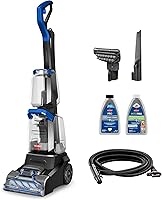
The Shark CarpetForce EX501 has an Express Clean mode that the brand says dries up to 50% faster than its deep-clean mode. It's a lightweight upright with a removable wand for edges and tight spots.
That faster dry time is the feature that matters most on wool. Use Express Clean for a light refresh and keep Deep Clean for synthetic carpets.
A shampooer is only as safe as its formula. Pair any machine with a wool-specific shampoo rather than a general carpet detergent.
That Bissell formula is built for deep cleaning on standard carpet, so don't run it through a wool rug. Choose a pH-neutral wool shampoo for the machine instead.
When should you skip the shampooer and call a pro?
Skip the shampooer on antique, hand-knotted, silk-blend or dry-clean-only wool rugs. Call a professional when the rug is valuable, heavily stained or already misshapen.
Signs to stop and get help include color bleeding, a rippled edge, a crunchy or matted pile after cleaning, or a persistent musty smell. Those point to fiber damage that more cleaning won't fix.
Very large wool rugs are also hard to dry flat at home. A pro has drying rooms and can clean both sides evenly.
If you're unsure about your rug's fiber or dye, test a hidden corner first. One short pass and a full dry will tell you more than any label.
What else should you know before you start?
Clean wool rugs less often than synthetic carpets, and spot-clean spills as they happen. A light annual refresh with a low-moisture shampooer is enough for most wool rugs.
The technique for wool is close to the one for other rugs, with more caution on water. Our guide on whether you can use a carpet cleaner on area rugs covers the general method, and it's worth reading before you tackle wool.
The same water rules apply when you clean upholstery in a car. See can you use a carpet cleaner on car seats for the fabric version of this job.
If you're still shopping for a machine, compare models in our guide to the best carpet shampooers. Pick one with a low-water mode and strong extraction for wool.
And if you're new to the machine itself, our walkthrough of how do you use a carpet cleaner covers filling, passes and emptying step by step.
To answer the question one last time: yes, you can use a carpet shampooer on a wool rug, but only with a wool-safe formula, a light touch and fast flat drying. Test a corner, keep the water low, and stop if the pile or color changes.
That routine protects the wool while still lifting everyday dirt.
Frequently asked questions
What happens if wool gets too wet during cleaning?
Wet wool fibers can lock together and felt, and the rug can shrink or ripple at the edges as it dries. Use less water than you would on synthetic carpet, extract as much as possible and dry the rug flat with airflow.
Should I test a shampooer on a hidden part of the wool rug first?
Yes, run a short pass on a corner or the back edge and let it dry fully. Check for color bleeding, fuzzing or a changed texture before you clean the whole rug, since wool dyes and finishes vary.
Can I use a carpet shampooer on a wool rug with a fringe?
Keep the machine head away from the fringe and clean the rug body only. Wool fringe tangles and stretches in a rotating brush, so blot it by hand or use a hand tool without brushing.
How long should a wool rug take to dry after shampooing?
Aim to have it dry within 12 to 24 hours using fans, open windows or a dehumidifier. Damp wool left longer risks odor, mildew and set-in ripples, so run airflow from the first hour.